
How to Trade Safely in Online Games: A 10-Point Checklist
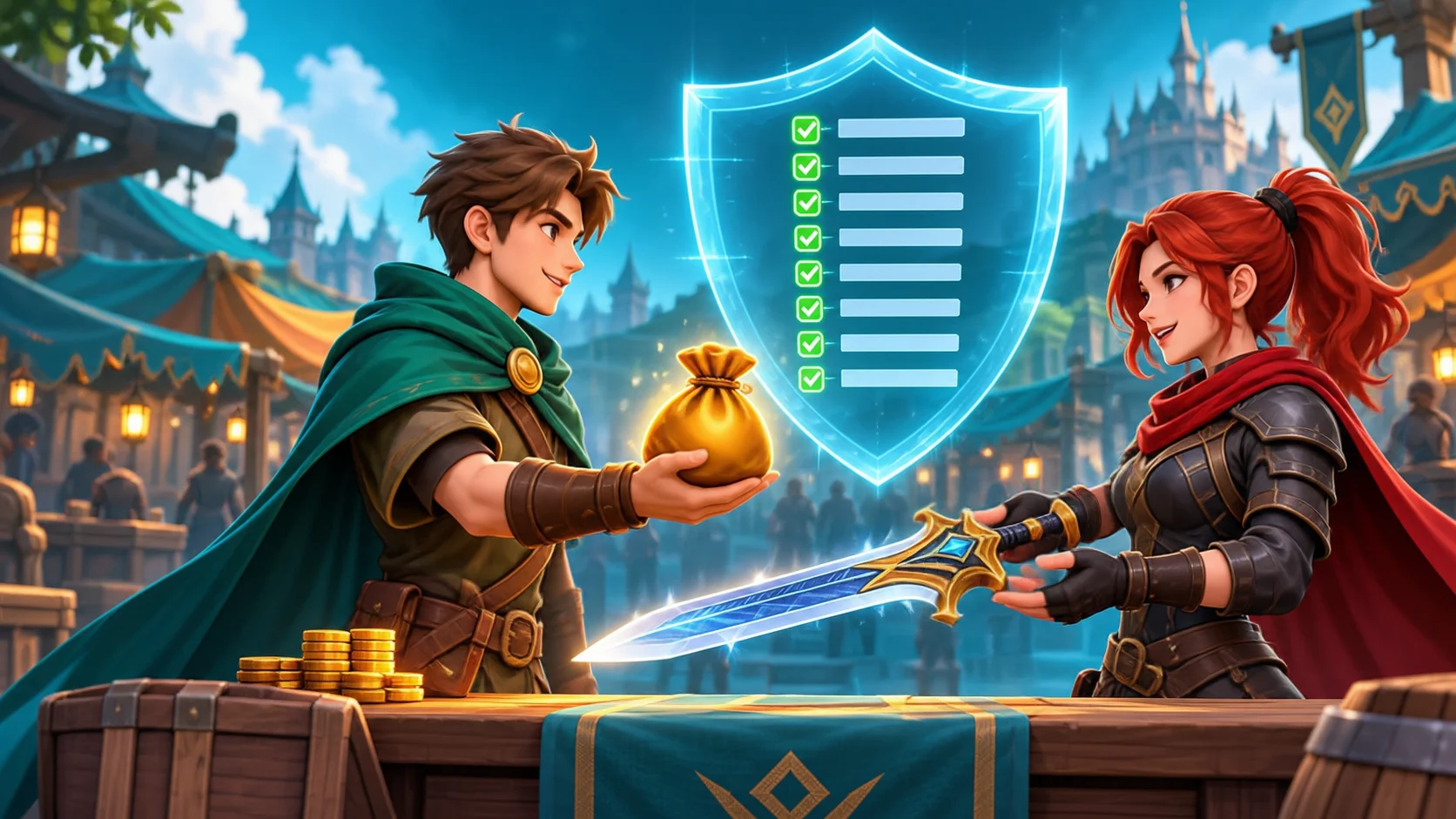
To trade safely in online games, check the platform’s protections, verify the other player’s history, keep every message on one platform and never hand over your login details. The ten checks below take about five minutes and cover the scams we see most often, from fake middlemen to stolen accounts.
How to trade safely in online games: the 10 checks
- Pick the platform before the seller: look for supervised deals, saved chats and visible seller badges.
- Look at the seller’s profile: account age, completed trades and reviews from other players. A brand new profile with a very low price deserves extra care.
- Keep the whole conversation on the platform. Moving to a private chat app removes your record and is the most common first step of a scam.
- Never share your password, your email access or a verification code. No genuine buyer or seller needs them for a currency trade.
- Prefer the in game trade window or the auction house for currency. They leave a record inside the game and avoid account handovers.
- Confirm the exact amount, server and character name before anything moves. Most disputes come from a mismatch nobody checked.
- Be suspicious of prices far below the usual market range. If an offer looks too good, ask what the seller gains.
- Take screenshots of the trade window, the chat and the final balance. They are your evidence if you need support.
- Release payment only after you have received what you paid for, and use the platform’s own payment flow rather than a side payment.
- Report anything strange to support straight away, before you continue the trade.
Why players lose money when they trade in online games
Most losses are not caused by clever hacking. They come from rushed decisions. A buyer sees a cheap offer, moves to a private chat, pays first and discovers that the seller has disappeared. The platform cannot help because nothing was recorded on it. Every check above exists to remove one of those weak points, which is why a player who wants to trade safely in online games should treat the checklist as a routine and not as an optional extra.
Three patterns appear again and again. The fake middleman claims to hold the currency until you pay, but is the same person as the seller. The overpayment trick sends you more than agreed and asks for a refund before the original payment clears. The recovery scam targets players who already lost something and promises to get it back for a fee. None of them works against a player who keeps the deal on a supervised platform and releases payment only after delivery.
Warning signs that should stop you
- The other player asks you to leave the platform or to confirm on another website.
- You are rushed with a countdown or a last one at this price message.
- The seller will not answer a simple question about the server or the amount.
- The link you receive does not match the official site address.
- Someone you have never spoken to offers to fix a problem you did not mention.
A safe trade versus a risky trade: a quick comparison
Imagine two buyers who want the same amount of currency. The first compares three sellers, reads their reviews, keeps the chat on the platform, confirms the server and character name, and releases payment once the currency arrives. If something is wrong, the full conversation and screenshots are already there. The second picks the cheapest profile, moves to a private chat, pays by a side method and has no record of the deal. Both spent roughly five minutes, yet only one can prove what happened. That difference is the reason this guide to trade safely in online games is built around records and delivery rather than around trust in strangers.
Account trades need extra care
An account holds more than the items you can see: it has an email address, recovery details and a history. Only deal in accounts when you must, and prefer a platform that records the handover. Check that the original email and recovery options are transferred, and change every password yourself once you are in. You can read how TrustGamers protection works and the marketplace rules.
What to do if a trade goes wrong
To trade safely in online games even after a bad experience, act in this order. First stop all contact and do not send more money. Second, save the chat, the screenshots and the payment reference. Third, report the case to the platform with those details, because a clear file is processed faster. Fourth, secure your accounts by changing passwords and enabling two step verification. If real money was lost through a card or bank transfer, also contact your bank quickly, as time limits can apply.
Official advice worth reading
For general guidance on spotting fake offers and phishing messages, the U.S. Federal Trade Commission explains how to protect yourself from phishing scams with simple steps that also apply to gaming marketplaces. Keeping these habits alongside the checklist above helps you trade safely in online games and covers both the human side and the technical side of a trade.
FAQ
How can I trade in game currency with confidence?
Check the seller’s history, keep the chat on one platform, use the in game trade window and never share login details.
What should I do first if I think I was scammed?
Stop all contact, save your screenshots and the order reference, and contact support. If you shared a password, change it and the password of the linked email account immediately.
Is it safe to move to Discord or WhatsApp to finish a deal?
It is safer to stay on the platform. A private chat removes the record that support needs, and moving off platform is the most common first step of a scam.
How long do the checks take?
About five minutes. Reading the profile, confirming the details and taking screenshots is a small effort compared with losing a payment.